Salt is one of the primordial and most fundamental components in the history of humankind. From the conservation of food to the advancement of flavor and balance of the body, edible salts are very important in our lives. Not every salt is like the other, however. There are different kinds of slats which differ in their origin, mineral composition, texture, taste, and cooking.
In this article, we are going to learn more about edible salts, like pink rock salt, Kala Namak, horse salt lick, and Himalayan pink salt, and also learn how to use, advantages, and distinctions.
What Are Edible Salts?
Edible salts are mineral compounds that people and animals safely consume, and they mainly contain sodium chloride (NaCl).Table salt is most prevalent, but natural salts usually have trace minerals that influence color, flavor, and texture.
Salt has several significant roles:
- Enhances flavor in food
- Preserves perishable items
- Rests the electrolyte balance in the body.
- Benefits nerve and muscle activity.
In addition to the common table salt, specialty salts have special features and uses.
- Pink Rock Salt:
Pink rock salt is a naturally mined salt with a soft pink color. It gets this color from trace minerals such as iron, potassium, and magnesium. People mostly mine it from ancient seabeds that dried up millions of years ago.
Key Features:
- Light pink to deep rose color
- Coarse texture
- light, slightly mineral taste.
Uses:
- Cooking and seasoning
- Fresh table seasoning grinders.
- Decorative salt bowls
- Bath and spa applications (non-edible applications)
Many consumers like pink rock salt as an option to less processed, refined table salt.
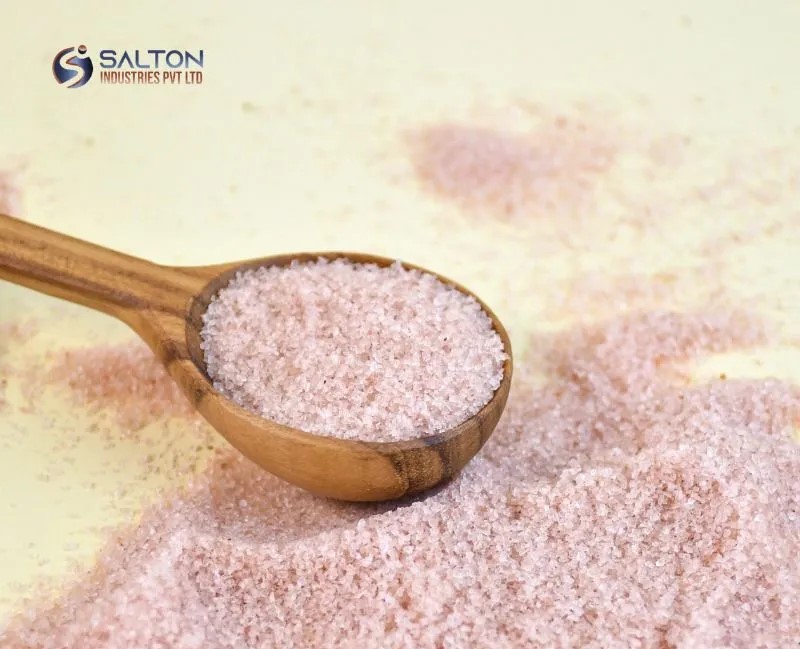
- Himalayan Pink Salt
The Himalayan pink salt is a special type of pink rock salt. This is mined primarily in the Khewra Salt Mine in Pakistan and is the one that is ranked as one of the cleansest natives.
What Makes It Unique?
- Contains trace minerals
- Minimally processed
- Comes in fine, coarse, and block.
Common Applications:
- Culinary (seasoning/brining/ grilling on salt blocks)
- Gourmet cooking
- Ornamental lighting (salt lamps).
- Wellness and health-related products.
Although promoted as beneficial to health, nutritionally, it acts like any other salt; its mineral composition is present in small quantities.
- Kala Namak (Black Salt):
Kala Namak, also known as black salt, is a volcanic rock salt that people widely use in South Asian cuisine. Despite its name, it usually appears as a pinkish-grey powder.
Distinctive Characteristics:
- Strong sulfuric aroma
- Slightly egg‑like flavor
- Fine to coarse texture
Culinary Uses:
- Chaat and street foods
- Fruit salads
- Raita and chutneys
- Vegan foods (as an imitation of the egg taste)
Its taste is due to sulfur compounds in Kala Namak, which people use in vegetarian and vegan dishes.
- Horse Salt Lick (Animal Salt):
Horse salt licks consist of pressed salt pieces that animals are meant to consume. Although technically they are edible salts, people design them for animal use.
Purpose:
- Provide essential minerals
- Maintain hydration
- Promote nerve and muscular activity.
Salt licks usually stay in the stables or grazing fields where animals get to eat salt whenever they feel like it.
Nutritional View on Edible Salts.
Sodium chloride is the major component of all edible salts. The primary food variation is trace minerals and the degree of processing.
Consideration of Sodium Intake.
Deviant sodium intake may result in:
- High blood pressure
- The risk of heart disease increases.
- Fluid retention
Adults should not usually take more than 2,300mg of sodium in a day, or less.
It can be table salt, Himalayan salt, or Kala Namak, but people should consume it sparingly.
How to Pick the Right Salt?
In choosing edible salt, look at:
- Intention – preparation, completing, or serving.
- Texture – fine to bake, coarse to garnish.
- Tasting Profile-neutral or sulfuric.
- Purity & Processing- refined vs minimal processing.
Refined salt that is mixed with iodine can be used on a daily basis to prevent iodine deficiency. In the case of gourmet dishes, natural salts are more appealing in texture and appearance.
FAQS
Q1: Is the Himalayan pink salt healthier than table salt?
Ans: Himalayan pink salt possesses of trace minerals in abundance but only in small quantities. It has the same nutritional value when compared to the normal table salt in terms of sodium. The most significant variations are the taste, texture, and processing procedures.
Q2: Is it permissible to eat horse salt lick?
Ans: Horse salt licks are supposed to be used on livestock. They consist of salt, but this does not necessarily qualify as food-grade for human consumption. Never put salt that is not designated for human use.
Q3 What is the taste of Kala Namak like eggs?
Ans: Kala Namak consists of sulfur compounds formed during its manufacture. These compounds have a characteristic aroma and flavour reminiscent of boiled eggs and, as a result, people commonly use them in vegan dishes.
Conclusion
Edible salts are also available in a variety of forms, and each of them has a particular property in terms of taste, texture, and usage. The Himalayan pink salt is also mineral-rich; the sulfuric richness of Kala Namak and the practicality of salt licks to livestock all demonstrate the uses of salt in cooking and in nutrition in various environments. Even though people might use specialty salts to add a degree of presentation and a slight flavor change, their basic structure stays very close to sodium chloride as the major constituent. The most notable distinction comes from processing, trace minerals, and intended use rather than dramatic health benefits. People need to select the appropriate salt based on its intended use whether in daily cooking, gourmet finishing, homeland recipes, or animal feed. Whichever choice people make, they must use it in moderation since too much sodium affects health.Salt is a small but mighty element in everyday life because when utilized properly, it not only enhances the flavor, but it also helps certain body processes to occur and is therefore beneficial. Send an email to info@saltonipl.com or make a call at Contact +92 345 4739722 to place an order.